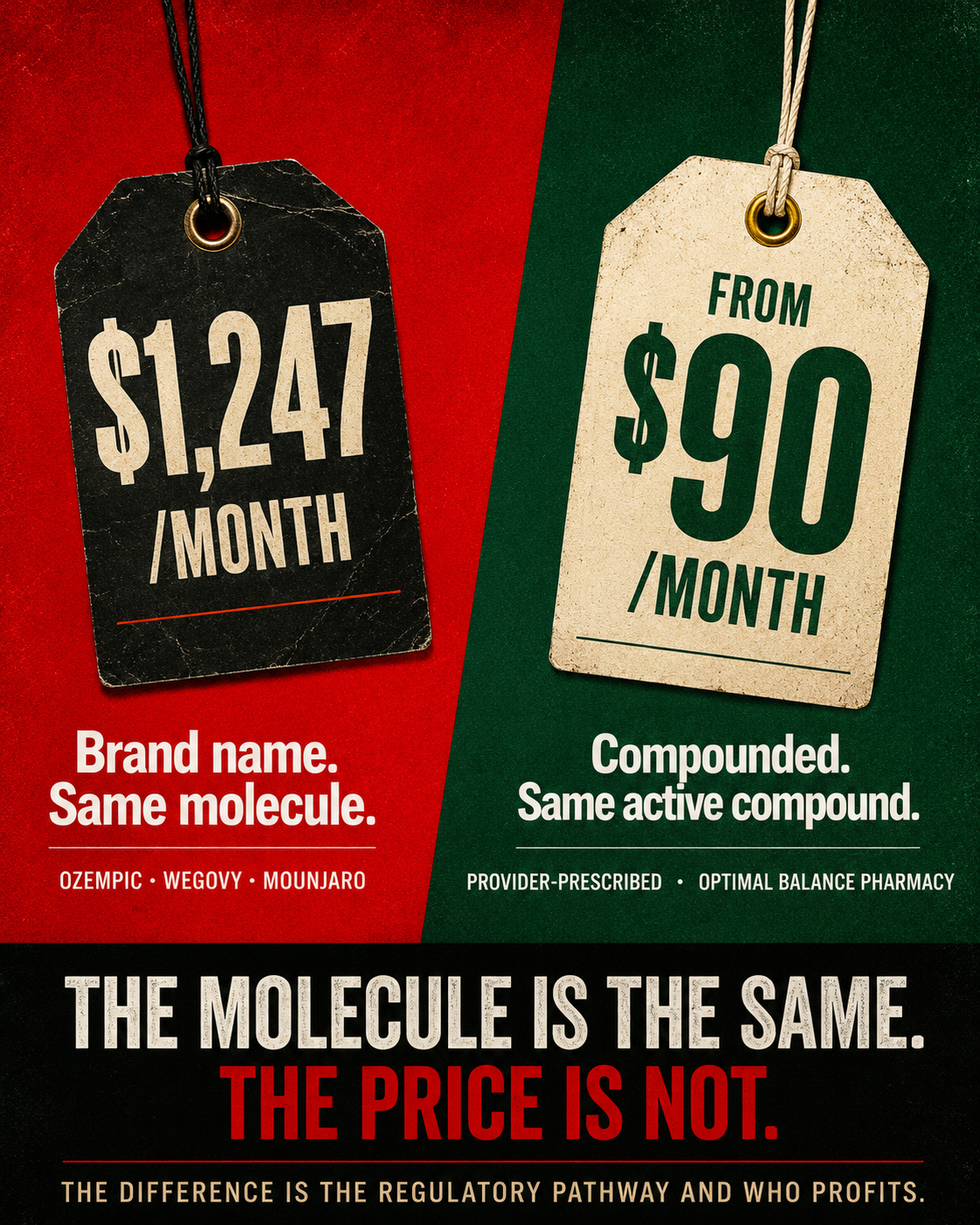
The brand names are everywhere. Ozempic. Wegovy. Mounjaro. Zepbound. You have seen them in the news, heard them mentioned at dinner parties, watched the cultural conversation around them build for two years.
And then someone mentioned compounded versions — same active ingredient, fraction of the cost — and you have questions. Good. Here are honest answers.
What compounded actually means
A compounded medication is one that is prepared by a licensed compounding pharmacy for a specific patient, based on a prescription from a licensed provider. It is not mass-produced on an assembly line. It is formulated to your individual prescription — your specific dose, your specific delivery format, your specific needs.
What is the same
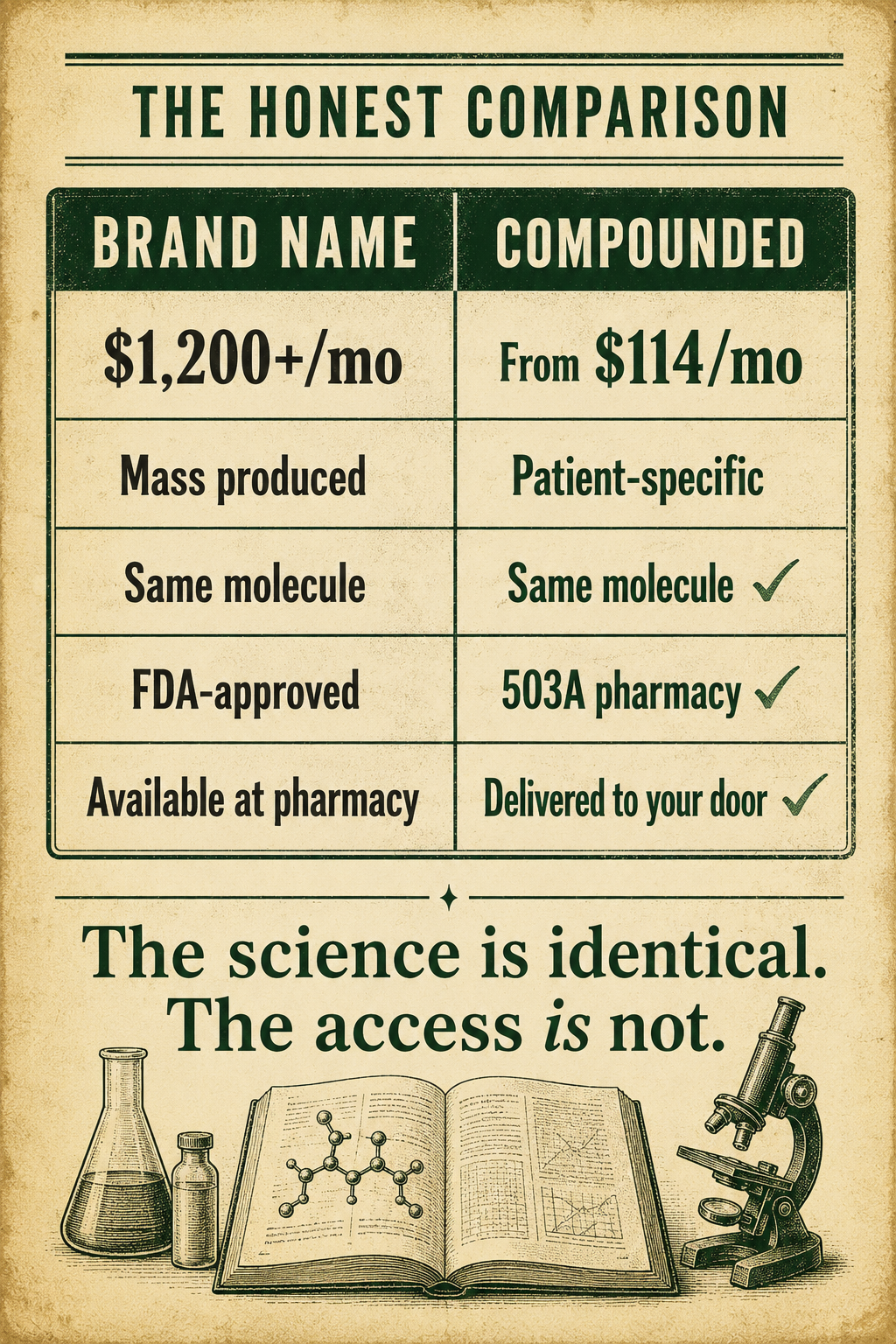
- The active compound — semaglutide or tirzepatide — is the same molecule
- The mechanism of action is identical — GLP-1 receptor activation
- The clinical effects patients experience are driven by the same biochemistry
- The provider oversight — prescription, monitoring, clinical review — is equivalent
What is different
- Compounded medications are not FDA-approved finished drug products
- They have not undergone FDA review for safety, efficacy, or manufacturing quality as finished products
- Inactive ingredients — the vehicle that carries the drug — may differ between compounded and brand-name versions
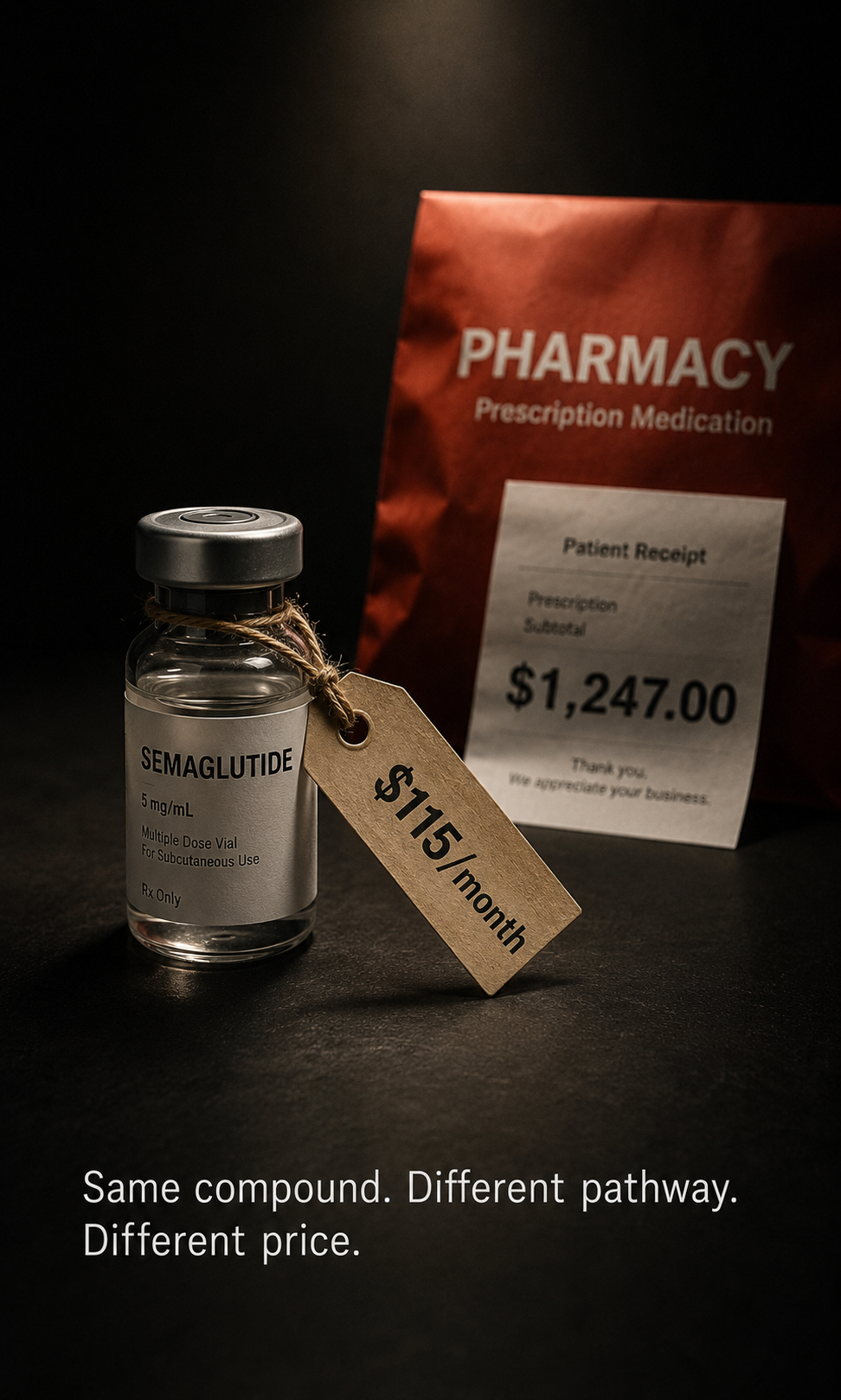
- The price: compounded versions cost 85–90% less than brand-name equivalents
Compounded does not mean inferior. It means patient-specific, pharmacy-crafted, and provider-prescribed. The distinction that matters most is whether your pharmacy is legitimate and licensed — which Optimal Balance Pharmacy is.
Still have questions before you decide anything?
That is exactly what the free consultation is for.
Talk to a provider — no commitment
The regulatory context
Compounding pharmacies in the United States operate under Section 503A of the Federal Food, Drug, and Cosmetic Act. This requires a valid patient-specific prescription, licensed pharmacy status regulated by the state board of pharmacy, and sourcing of APIs from FDA-registered manufacturers.
What to avoid: online sources selling compounded GLP-1 medications without a valid prescription, without a licensed pharmacy, or without provider oversight. That category exists and is categorically different from what Empathetix provides.
The shortage context
The FDA had previously designated semaglutide as being in shortage, which permitted compounding under certain conditions. The shortage status has since changed. Availability of compounded GLP-1 medications is subject to evolving FDA guidance. Your coordinator confirms current availability during your consultation.
Ready to find out if a GLP-1 program is right for you?
The consultation is always free. A licensed provider
reviews your profile and gives you a straight clinical
answer - no commitment required. You only pay if a
protocol is approved for your situation.
Start with a free conversation →
Free consultation · Provider review within 24 hours ·
Ships in 2 days if approved
For informational purposes only — not medical advice. Results vary and are not guaranteed. All protocols require provider evaluation and approval before
anything is prescribed. Compounded medications are not FDA-approved finished drug products. Not all patients will be approved for treatment. Medical emergency? Call 911.
© Empathetix Wellness · empathetix.com ·
(801) 804-3166 · info@empathetix.com