
Weight loss is not the same as fat loss. This distinction matters — clinically and practically — more than most weight loss conversations acknowledge.
When you lose weight through any method — diet, exercise, medication, or combination — you lose a mix of fat and lean mass, including muscle. The ratio between the two determines whether the weight you lose is actually improving your body composition or just making you a smaller version of the same metabolic picture.
What the research shows on GLP-1 programs
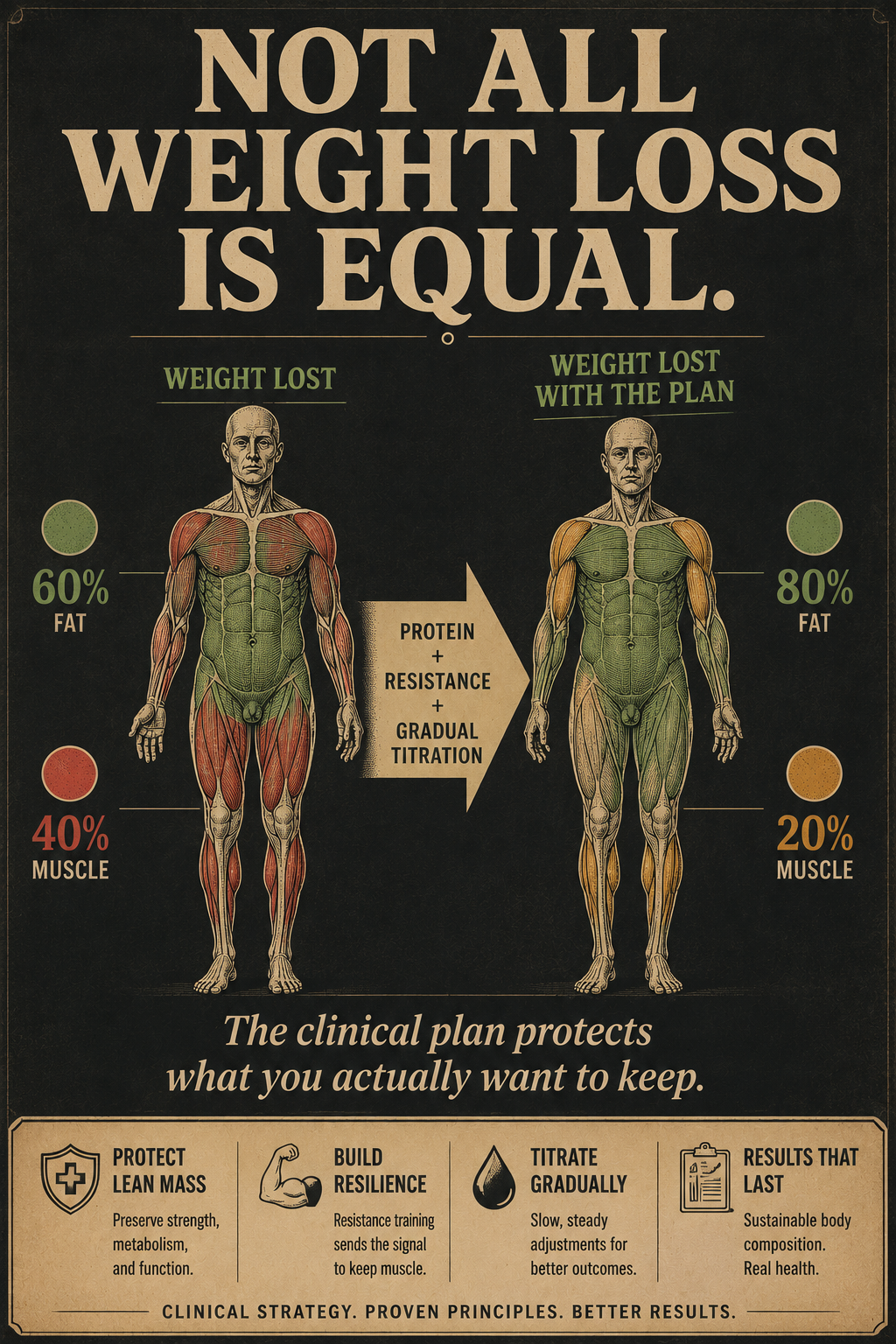
Clinical trials of semaglutide and tirzepatide show that approximately 25–40% of total weight loss in some cohorts consists of lean mass rather than fat mass. This is consistent with what is seen in most rapid weight loss protocols.
The higher the rate of weight loss, the greater the proportion of lean mass typically lost. The lower the protein intake during weight loss, the greater the lean mass loss. Both of these variables are modifiable.
Muscle is not a luxury. It is the metabolic engine that determines how many calories you burn at rest, how your body responds to insulin, how you age, and how you feel. Protecting it during weight loss is not an aesthetic preference — it is a health priority.

What actually protects muscle on a GLP-1 program
Adequate protein intake. The research on protein during weight loss is consistent. Higher protein intake — typically 1.2 to 1.6 grams per kilogram of body weight — is associated with significantly greater preservation of lean mass. On a GLP-1 program where overall caloric intake decreases substantially, prioritizing protein within that reduced intake is the most important nutritional decision.
Resistance training. The combination of a GLP-1 program with regular resistance training produces meaningfully better body composition outcomes than the medication alone. You do not need to become a powerlifter. Two to three resistance sessions per week of moderate intensity is clinically meaningful.
Dose titration. Slower, more gradual weight loss — which appropriate dose titration supports — generally preserves more lean mass than rapid loss. Your provider's approach to dose adjustment is part of this protection.
What your provider monitors
At the Day 28 check-in and subsequent monitoring appointments, your provider reviews not just weight lost but the quality of that loss when clinical assessment is possible. If lean mass concerns are identified, protocol adjustments can be made.
Ready to find out if a GLP-1 program is right for you?
The consultation is always free. A licensed provider
reviews your profile and gives you a straight clinical
answer - no commitment required. You only pay if a
protocol is approved for your situation.
Start with a free conversation →
Free consultation · Provider review within 24 hours ·
Ships in 2 days if approved
For informational purposes only — not medical advice. Results vary and are not guaranteed. All protocols require provider evaluation and approval before
anything is prescribed. Compounded medications are not FDA-approved finished drug products. Not all patients will be approved for treatment. Medical emergency? Call 911.
© Empathetix Wellness · empathetix.com ·
(801) 804-3166 · info@empathetix.com