
Pain is not just where it hurts. Pain is a conversation between your body and your brain — and sometimes that conversation gets stuck in a loop.
Central sensitization is what happens when the brain's pain-processing system becomes hypersensitive. The original injury heals. The alarm system keeps ringing anyway. Full volume. Nothing turns it off.
This is where ketamine becomes interesting.
NMDA receptors are involved in how the central nervous system amplifies pain signals. Ketamine blocks those receptors — which interrupts the loop at a neurological level, not just a chemical one.
Ketamine has been used in clinical pain management for decades. Long before it became a conversation about mental wellness. The pain application is not new. It is just underreported.
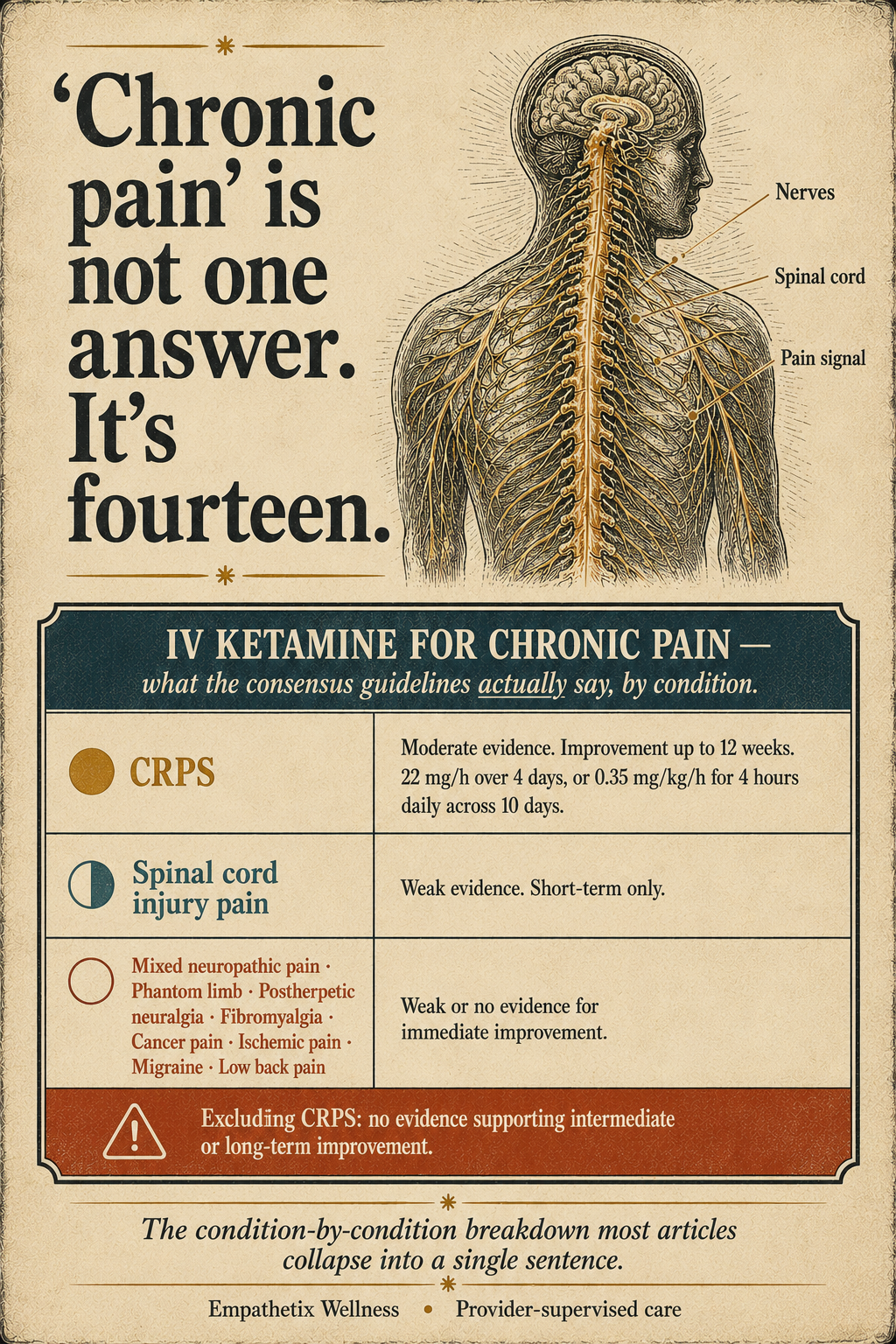
What kinds of pain respond?
Chronic musculoskeletal pain. Neuropathic pain — the kind that feels like burning or electric shock. Post-surgical pain that never fully resolved. Fibromyalgia. Complex regional pain syndrome.
Not all chronic pain responds equally. The clinical screening determines whether your specific pain pattern and health history make ketamine a reasonable option.
How long do the effects last?
This varies significantly between individuals. Some patients report meaningful relief for weeks to months following a treatment course. The neurological mechanism — resetting hypersensitive pain pathways — is thought to be part of why effects can persist beyond the treatment itself.
Still have questions before you decide anything?
That is exactly what the free consultation is for.
Talk to a provider — no commitment
For informational purposes only — not medical advice. Results vary and are not guaranteed. All protocols require provider evaluation and approval before
anything is prescribed. Compounded medications are not FDA-approved finished drug products. Not all patients will be approved for treatment. Medical emergency? Call 911.
© Empathetix Wellness · empathetix.com ·
(801) 804-3166 · info@empathetix.com