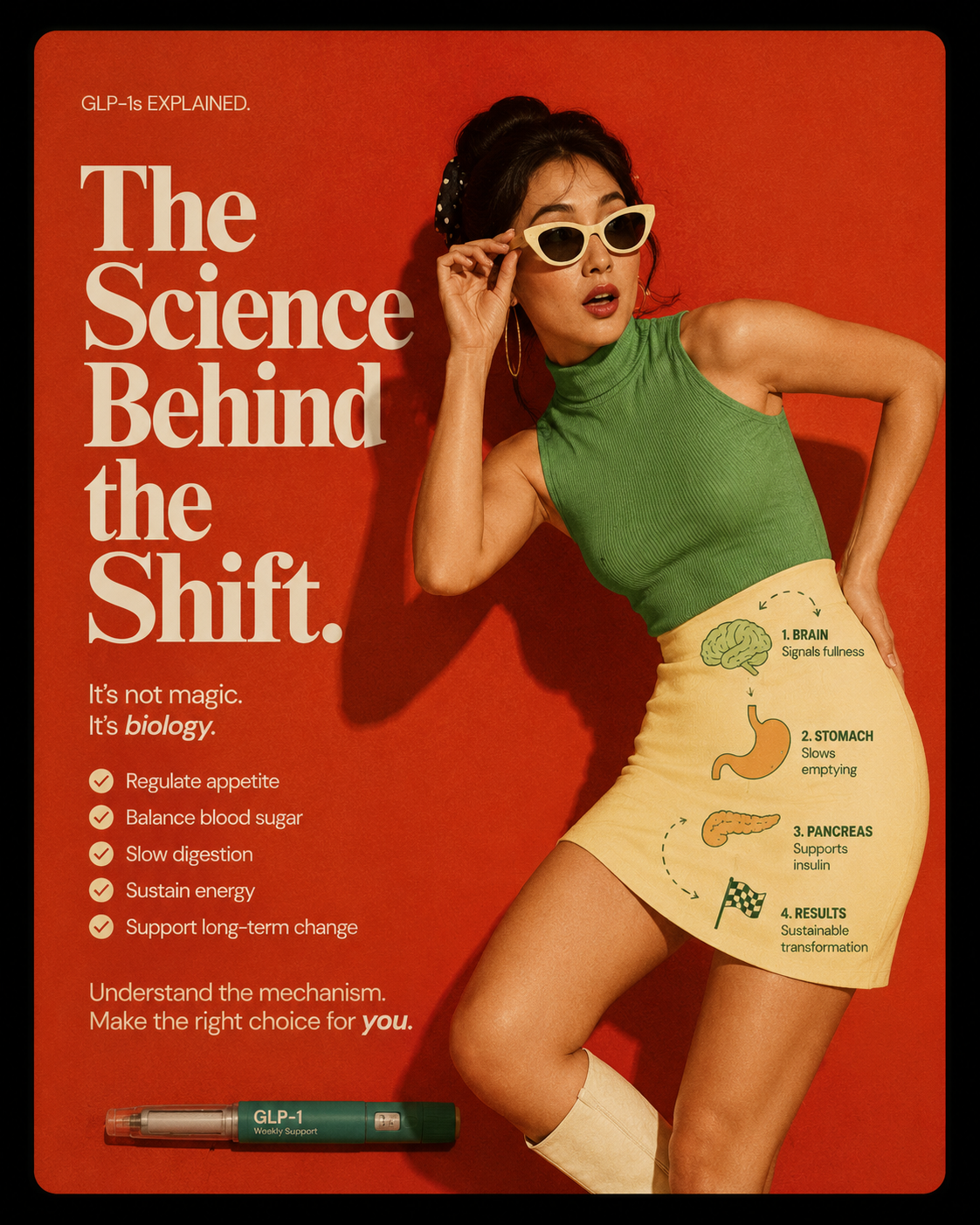
For people who want to understand the mechanism before they decide anything.

|Your body speaks in signals. One of them — glucagon-like peptide-1, GLP-1 — tells your brain you're full, slows digestion, and steadies blood sugar. It's released naturally in your gut after eating.
The problem: in many people, this signal is quieter than it should be. The 'I'm full' message arrives late. Or not at all.
Research shows people with obesity often have blunted GLP-1 responses after eating. The signal is there. It's just not loud enough.
|GLP-1 receptor agonists amplify that signal. They don't replace biology — they turn up the volume on something already inside you.
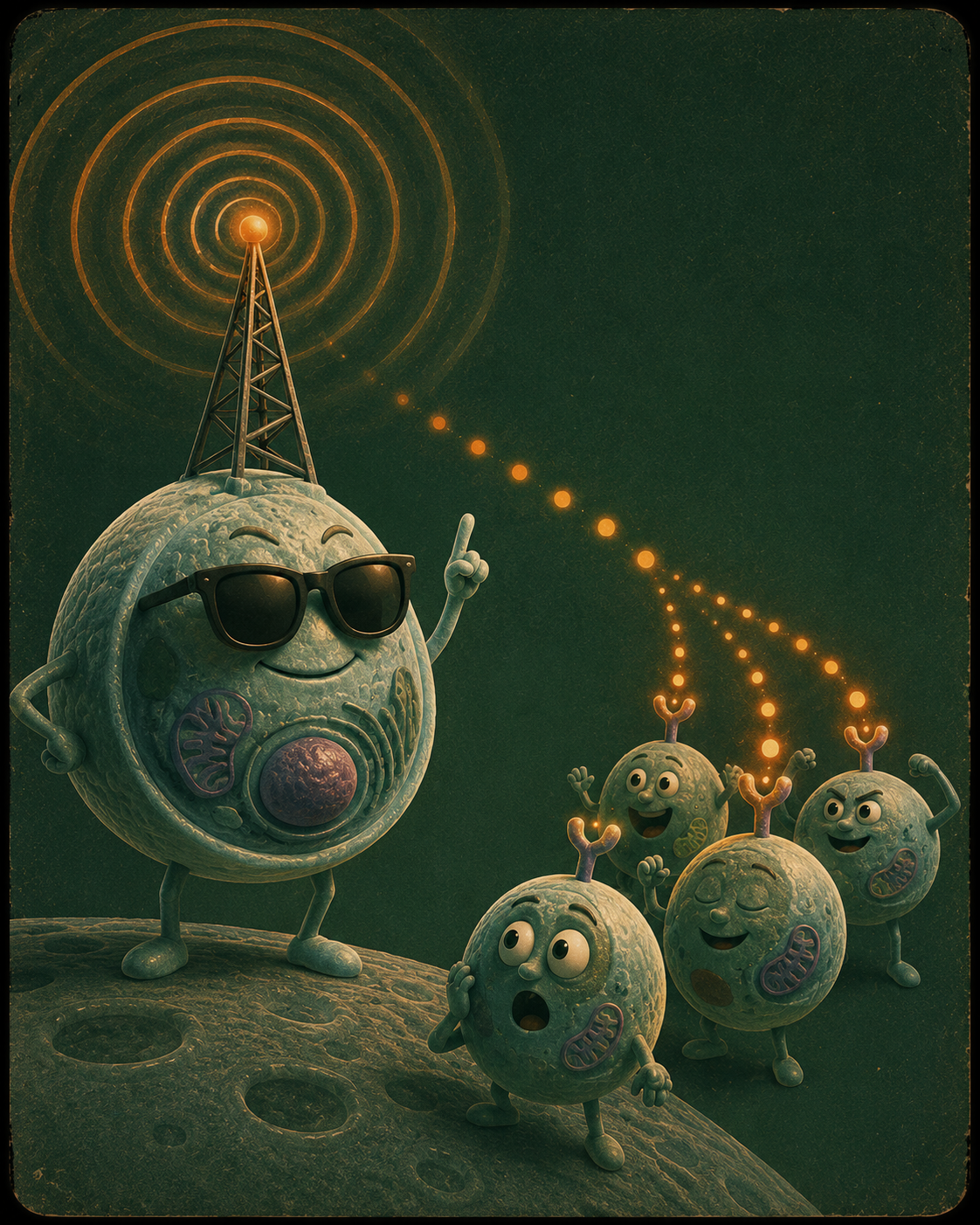
The result most patients describe: food becomes less urgent. The constant negotiation with hunger goes quiet. Not through willpower — through chemistry.
This isn't a shortcut. It's a lever that willpower was never designed to pull.
Understanding this doesn't mean you should start a program. It means you now know why what you tried before may not have stuck — and what's actually different about a clinical approach.
If you want to know whether your biology is a candidate for this kind of support — a free conversation with a medical provider is the place to start.