
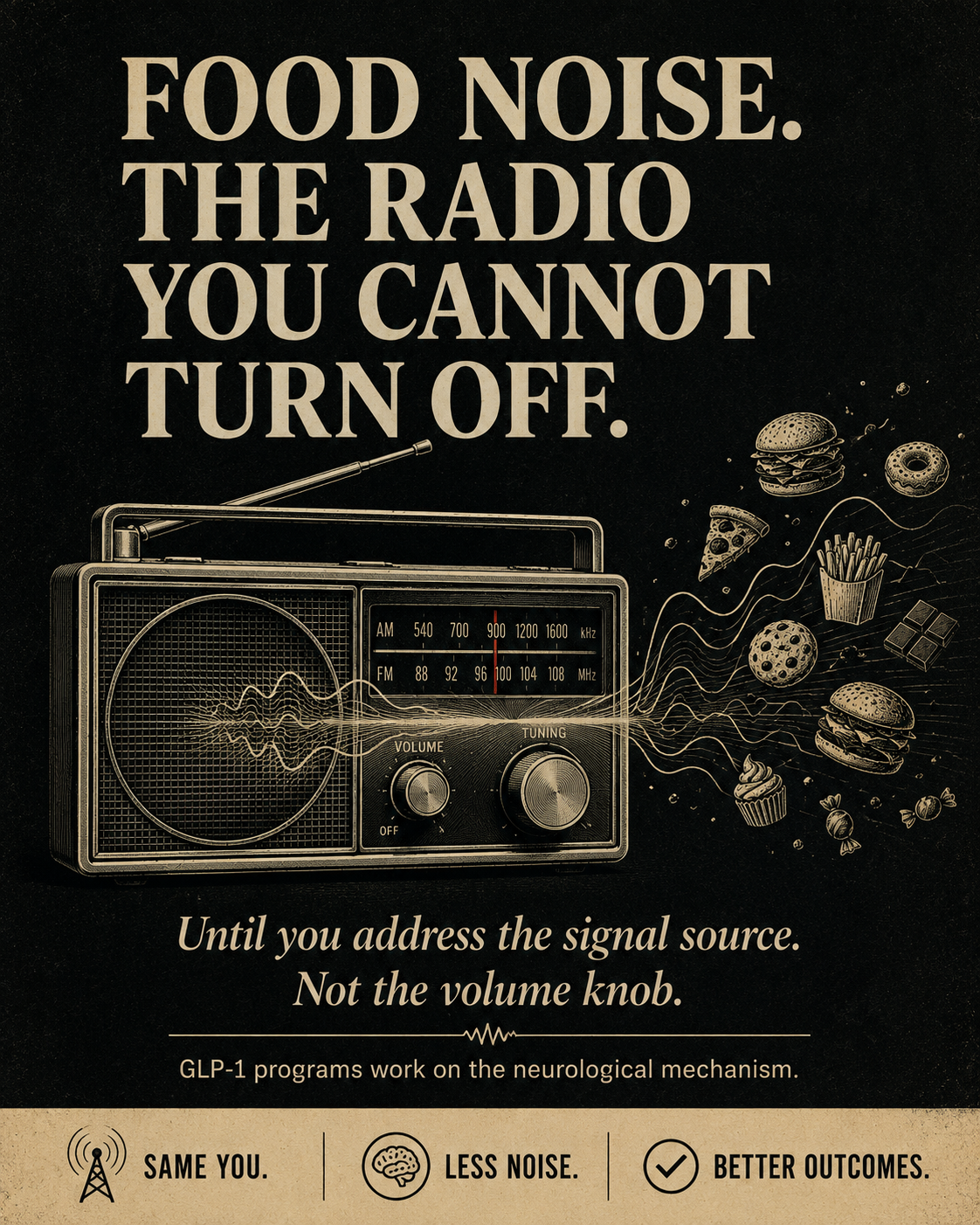
Imagine a radio that you cannot turn off. It plays in the background of every room you enter, every quiet moment, every time you are bored, stressed, happy, or simply near a kitchen. The station plays one thing: thoughts about food.
For most people this is an occasional experience. For a significant subset of people it is the constant background of their mental life. The clinical term emerging in the conversation around GLP-1 medications is food noise.
What food noise actually is
Food noise is not hunger in the traditional physiological sense. It is the intrusive mental preoccupation with food — the planning, the imagining, the calculating, the negotiating — that occurs independent of actual caloric need.
It is a neurological phenomenon. The brain's reward circuitry — the same system that governs motivation, pleasure, and habit formation — assigns disproportionate attention to food-related stimuli in some people more than others. This appears to have a genetic component, an environmental component, and a hormonal component.
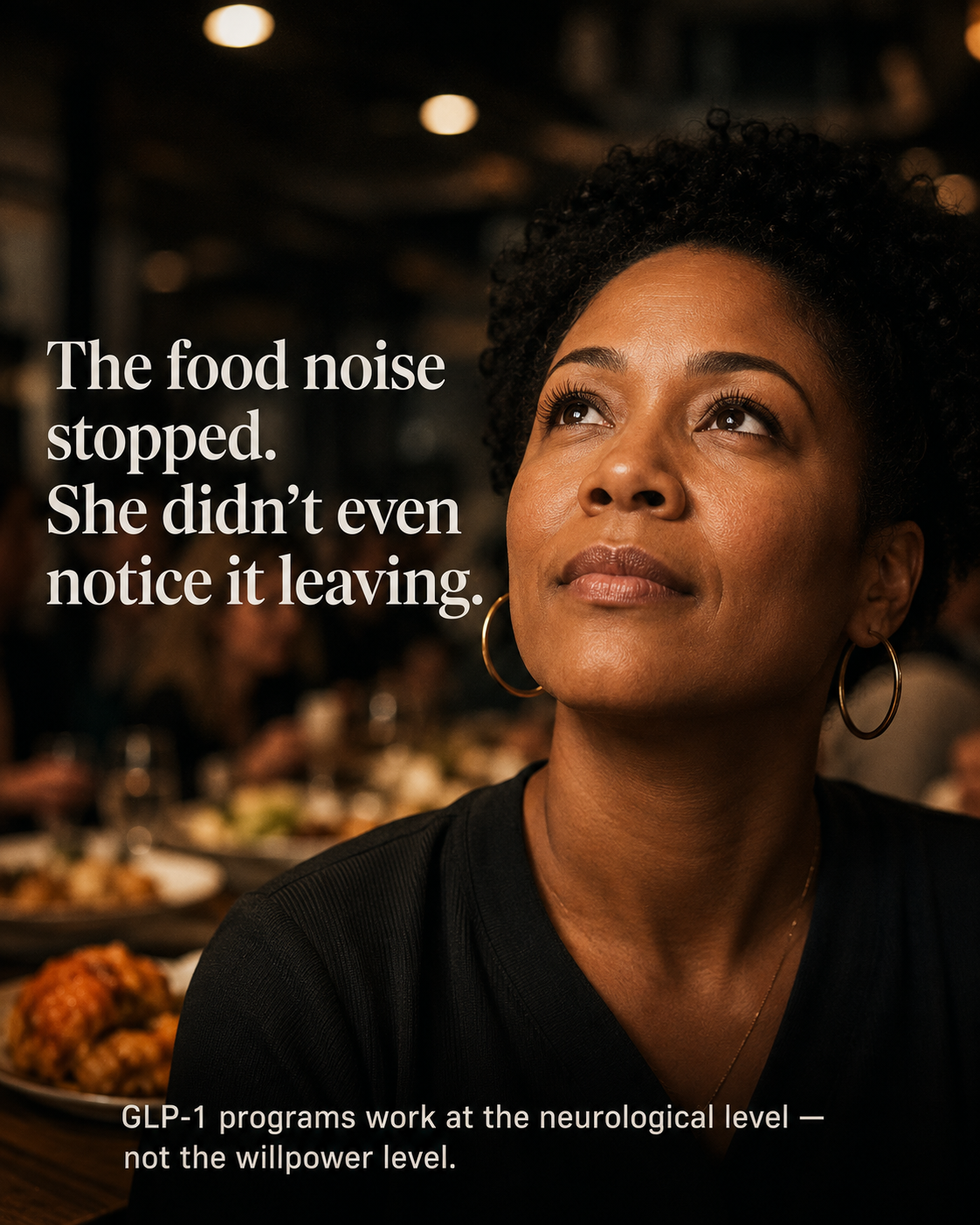
Food noise is not a sign of weak willpower. It is a sign of a reward system that is particularly tuned to food cues. That tuning is neurological, not moral.
Still have questions before you decide anything?
That is exactly what the free consultation is for.
Talk to a provider — no commitment
Why GLP-1 medications quiet it
The GLP-1 receptor exists not only in the gut but also in the brain — specifically in regions involved in reward processing and appetite regulation. When GLP-1 receptor agonists activate these brain receptors, something happens that patients consistently report as surprising: the mental chatter about food becomes quieter.
Not gone in every case. But significantly reduced in many. Some patients describe it as the first time in their adult life that food has simply been food — a practical decision rather than a constant negotiation.
Patient-reported food noise reduction is one of the most consistently cited benefits in GLP-1 patient surveys — often ranked above weight loss results by people who have lived with severe food preoccupation.
What this means for the weight loss experience
When food noise quiets, eating less stops feeling like a battle. The psychological cost of dietary restraint — which is what makes dieting so exhausting and ultimately unsustainable — decreases. The effort required to make reasonable food choices drops from enormous to manageable.
This is mechanistically different from willpower. It is the biological conditions for restraint changing, rather than the person trying harder under the same conditions.
Is food noise a sign I am a good candidate?
It is useful clinical information. Tell your provider if food noise has been a significant part of your experience with weight management. It shapes the clinical picture and may be relevant to which protocol is recommended.
Ready to find out if a GLP-1 program is right for you?
The consultation is always free. A licensed provider
reviews your profile and gives you a straight clinical
answer - no commitment required. You only pay if a
protocol is approved for your situation.
Start with a free conversation →
Free consultation · Provider review within 24 hours ·
Ships in 2 days if approved
For informational purposes only — not medical advice. Results vary and are not guaranteed. All protocols require provider evaluation and approval before
anything is prescribed. Compounded medications are not FDA-approved finished drug products. Not all patients will be approved for treatment. Medical emergency? Call 911.
© Empathetix Wellness · empathetix.com ·
(801) 804-3166 · info@empathetix.com