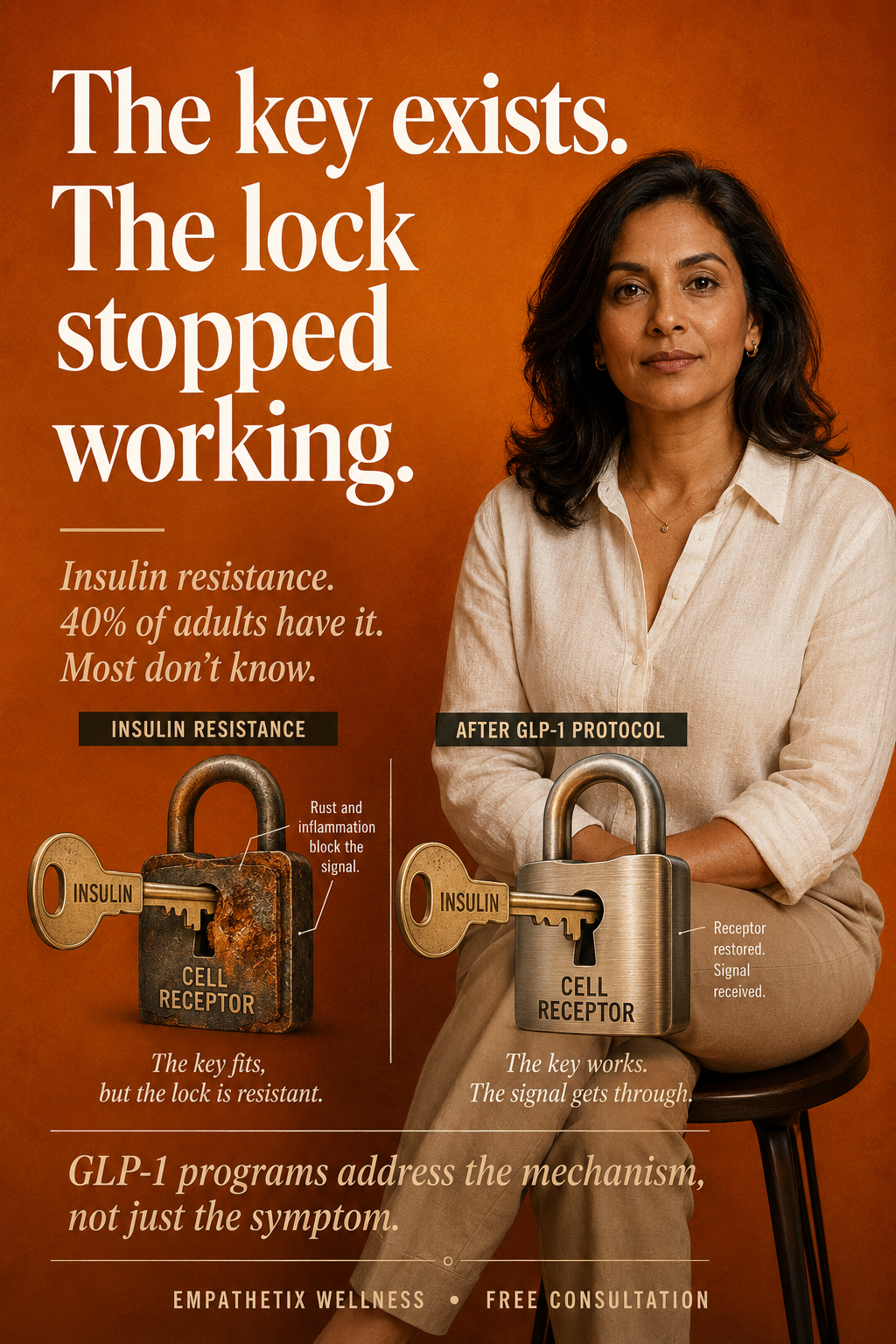
Insulin resistance is one of the most common and least discussed contributors to weight management difficulty in adults. It is also one of the conditions that GLP-1 medications address most directly.
Understanding what it is makes the clinical picture of why weight loss is hard — and why certain tools work better than others — significantly clearer.
What insulin resistance actually is
Insulin is a hormone your pancreas produces to help cells absorb glucose from the bloodstream and use it for energy. In a healthy system this works fluidly: you eat, blood glucose rises, insulin is released, cells absorb the glucose, blood glucose normalizes.
In insulin resistance, the cells stop responding to insulin efficiently. The key stops fitting the lock as well as it used to. The pancreas compensates by producing more insulin. Blood glucose may stay in a normal range — but the elevated insulin level creates a cascade of metabolic effects.
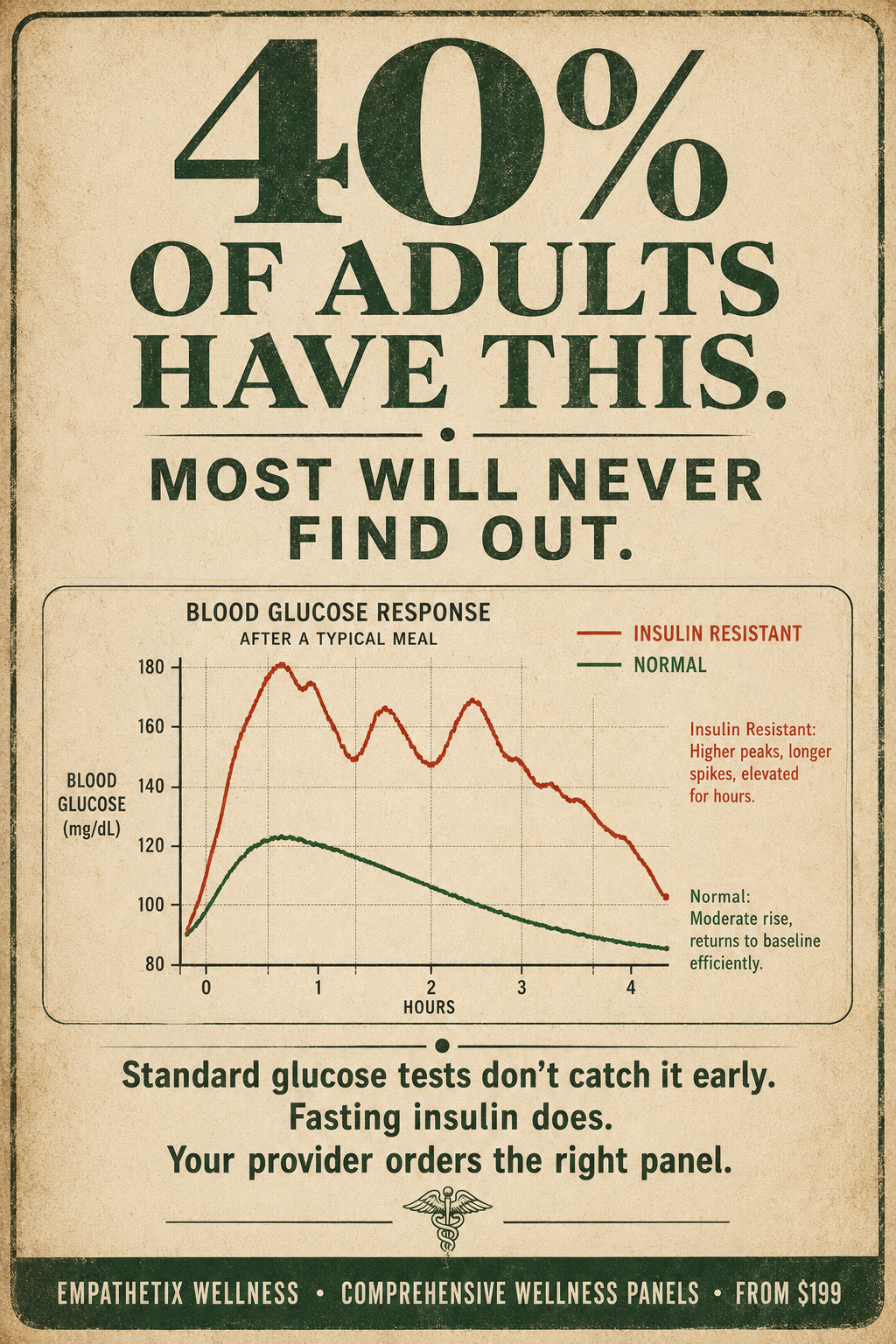
Chronically elevated insulin signals the body to store fat rather than burn it. It preferentially stores that fat in the abdomen. It makes it harder to access stored fat for energy. It increases hunger signals. It makes weight loss physiologically harder — not because you are doing something wrong, but because the metabolic conditions are working against you.
How common is this?
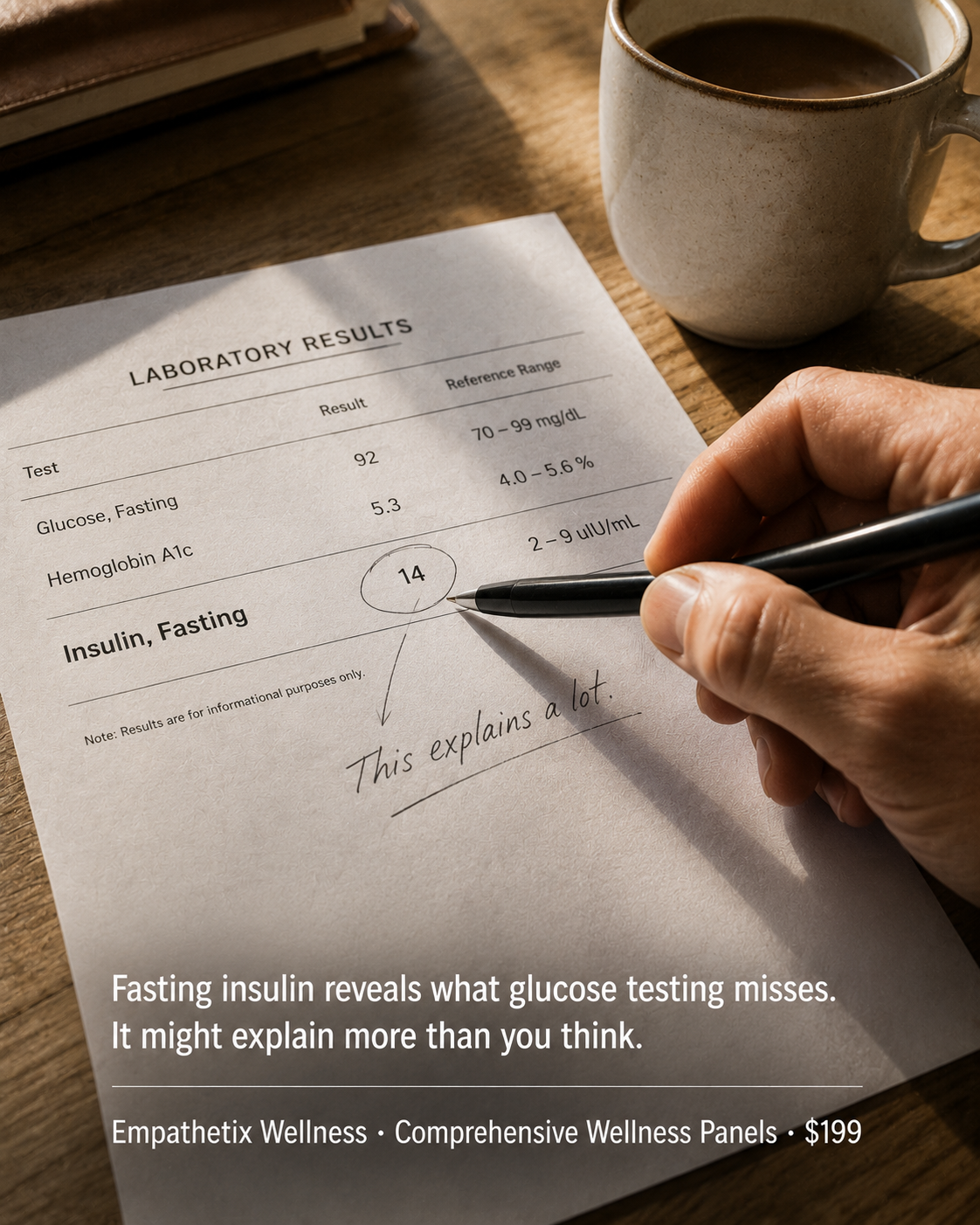
Estimates suggest that 40% of adults in the United States have some degree of insulin resistance. Many of them do not know it because standard fasting glucose testing does not capture it until it has progressed significantly. Fasting insulin — which most standard panels do not include — reveals it earlier.
Why GLP-1 medications address this specifically
GLP-1 receptor agonists improve insulin sensitivity directly. They reduce the amount of insulin the pancreas needs to produce to manage blood glucose. As insulin levels normalize, the fat-storage signal decreases, abdominal fat becomes more accessible for energy use, and hunger signals recalibrate.
This is one reason why GLP-1 programs often produce results that diet and exercise alone cannot — they address the metabolic mechanism that was making diet and exercise insufficient.
How to know if insulin resistance is part of your picture
A fasting insulin level on a blood panel is the most direct assessment. A Comprehensive Wellness Panel through Empathetix includes fasting insulin alongside glucose and HbA1c. If insulin resistance is identified, it shapes both the protocol recommendation and the monitoring plan.
Ready to find out if a GLP-1 program is right for you?
The consultation is always free. A licensed provider
reviews your profile and gives you a straight clinical
answer - no commitment required. You only pay if a
protocol is approved for your situation.
Start with a free conversation →
Free consultation · Provider review within 24 hours ·
Ships in 2 days if approved
For informational purposes only — not medical advice. Results vary and are not guaranteed. All protocols require provider evaluation and approval before
anything is prescribed. Compounded medications are not FDA-approved finished drug products. Not all patients will be approved for treatment. Medical emergency? Call 911.
© Empathetix Wellness · empathetix.com ·
(801) 804-3166 · info@empathetix.com