There is a moment in every person's search for mental relief where the usual options run out. You have tried the first medication. Then the second. Maybe a third. Something works partially, temporarily, or not at all.
And then someone mentions ketamine.
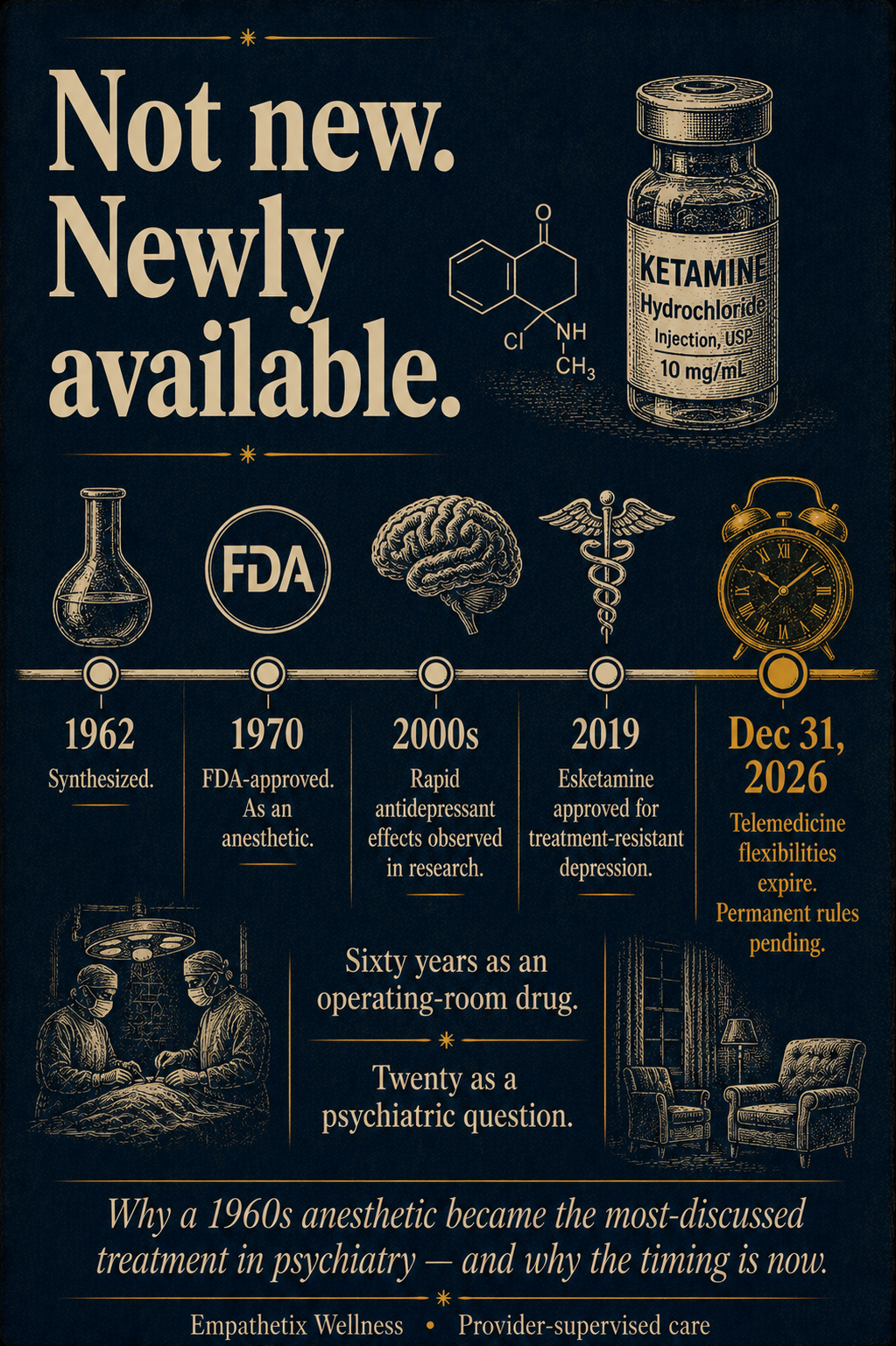
Your first instinct is probably skepticism. That is fair. Ketamine has a complicated cultural story. But underneath the cultural noise is a 60-year clinical history that most people never hear about.
Ketamine has been on the World Health Organization's list of essential medicines since 1985. Not fringe. Not experimental. Essential.
So what is it actually doing?
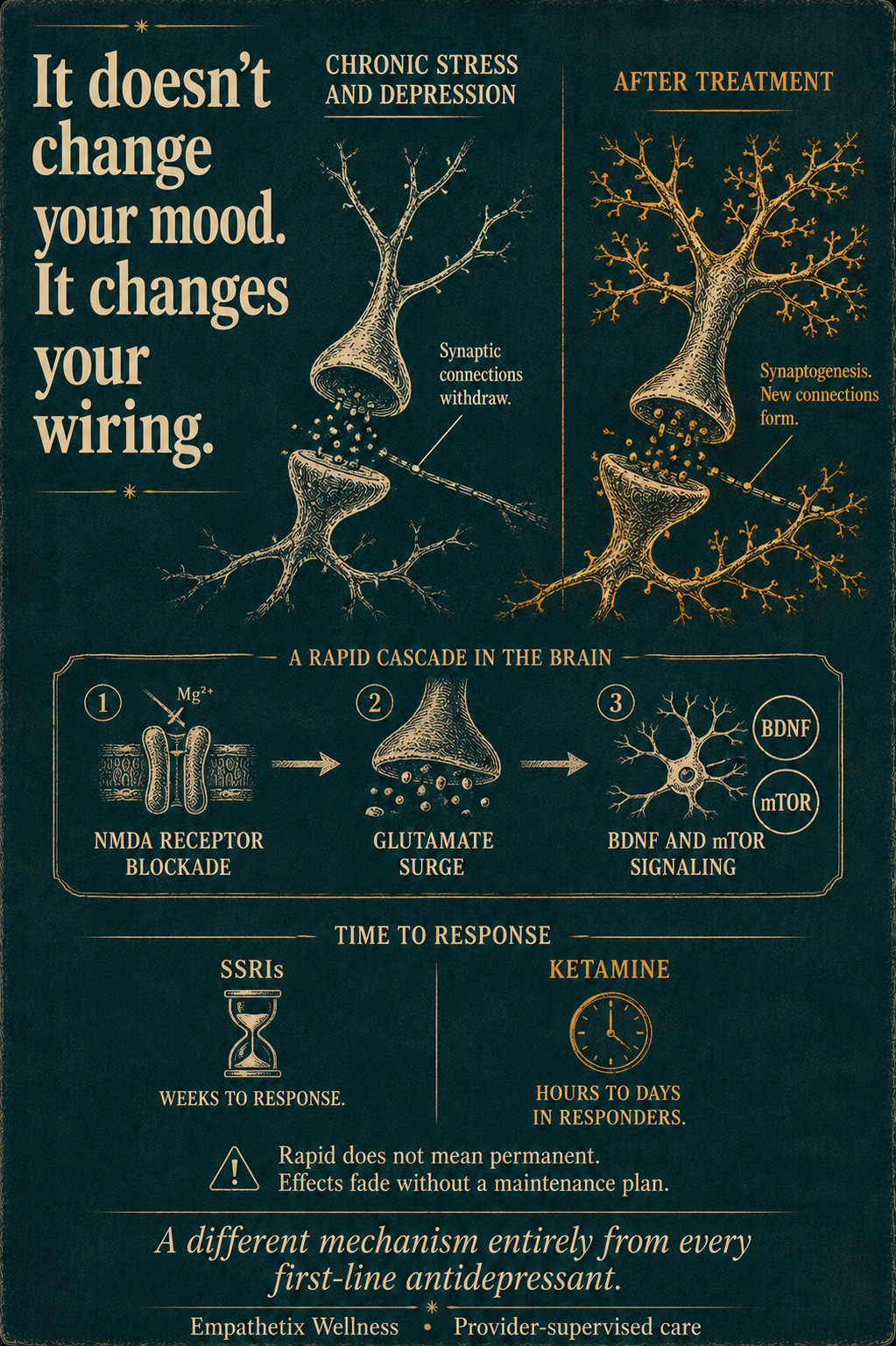
Most medications for mental health work on serotonin, norepinephrine, or dopamine — the brain's primary mood chemicals. They're like adjusting the volume on a radio station.
Ketamine works on something different entirely — the NMDA receptor, which governs how your brain forms and reorganizes connections. It does not just adjust the signal. It changes the wiring.
Think of it this way. If conventional approaches are trying to fix a software problem by changing the settings, ketamine is closer to updating the operating system itself. Different mechanism. Different result.
What does a session actually look like?
A provider-supervised ketamine program is not what you are imagining. It is clinical, calm, and structured. There is a thorough screening before anything is prescribed. A coordinator is present throughout. The session lasts 45 to 90 minutes.
Most patients describe the experience as deeply quiet. Some describe profound moments of clarity. Individual experiences vary — the brain, like every fingerprint, is uniquely its own.
Who is this for?
People who have tried conventional approaches and not gotten far enough. People managing chronic mental and emotional weight who want something that works through a different door. People who are still looking — which says more about their strength than anything else.
You being still here and still looking is not a sign of failure. It is a sign of something that does not know how to quit.
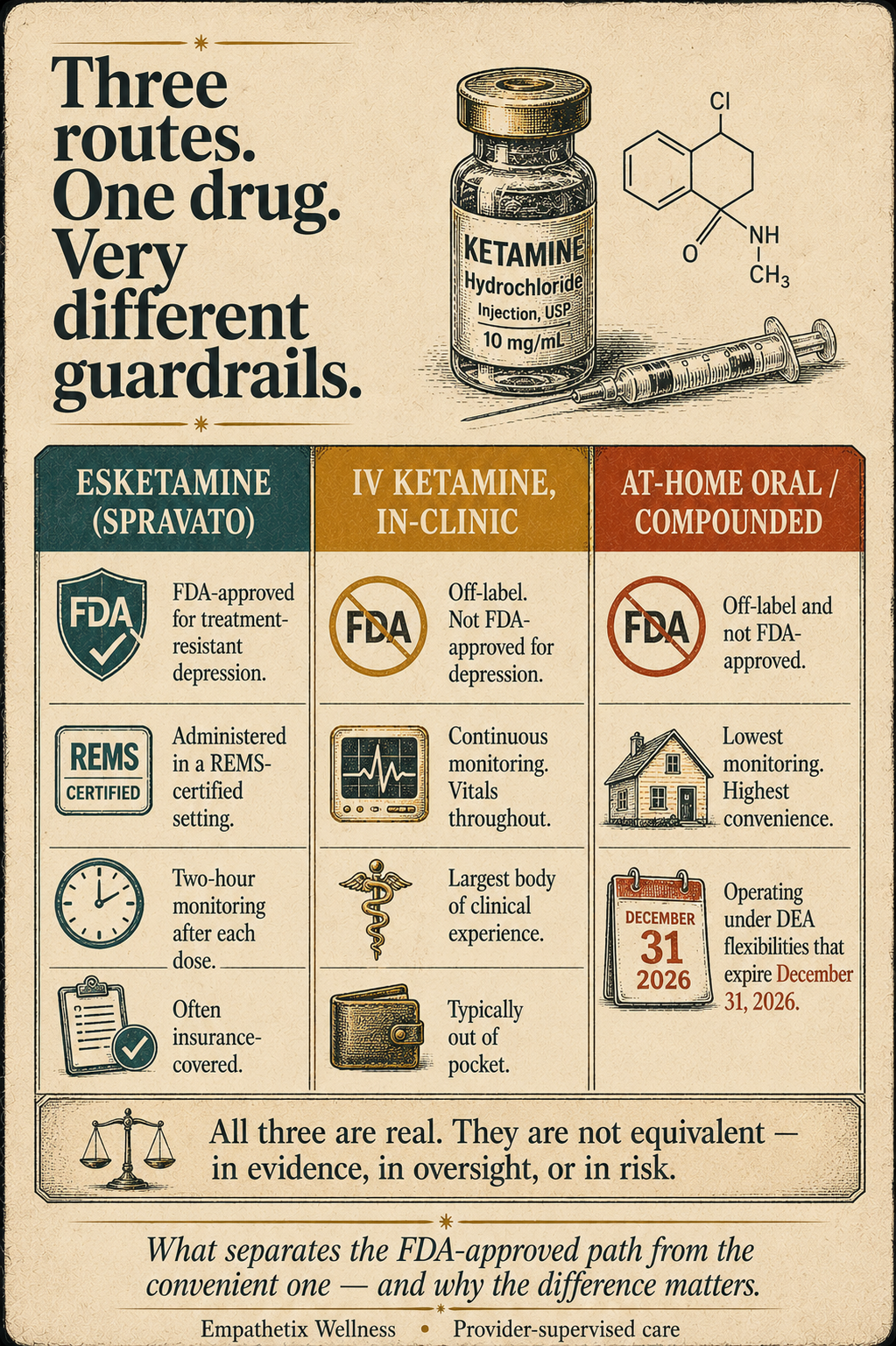
Provider-supervised ketamine programs require a clinical screening. Not everyone is approved — and that screening is the protection.
Still have questions before you decide anything?
That is exactly what the free consultation is for.
Talk to a provider — no commitment
For informational purposes only — not medical advice. Results vary and are not guaranteed. All protocols require provider evaluation and approval before
anything is prescribed. Compounded medications are not FDA-approved finished drug products. Not all patients will be approved for treatment. Medical emergency? Call 911.
© Empathetix Wellness · empathetix.com ·
(801) 804-3166 · info@empathetix.com