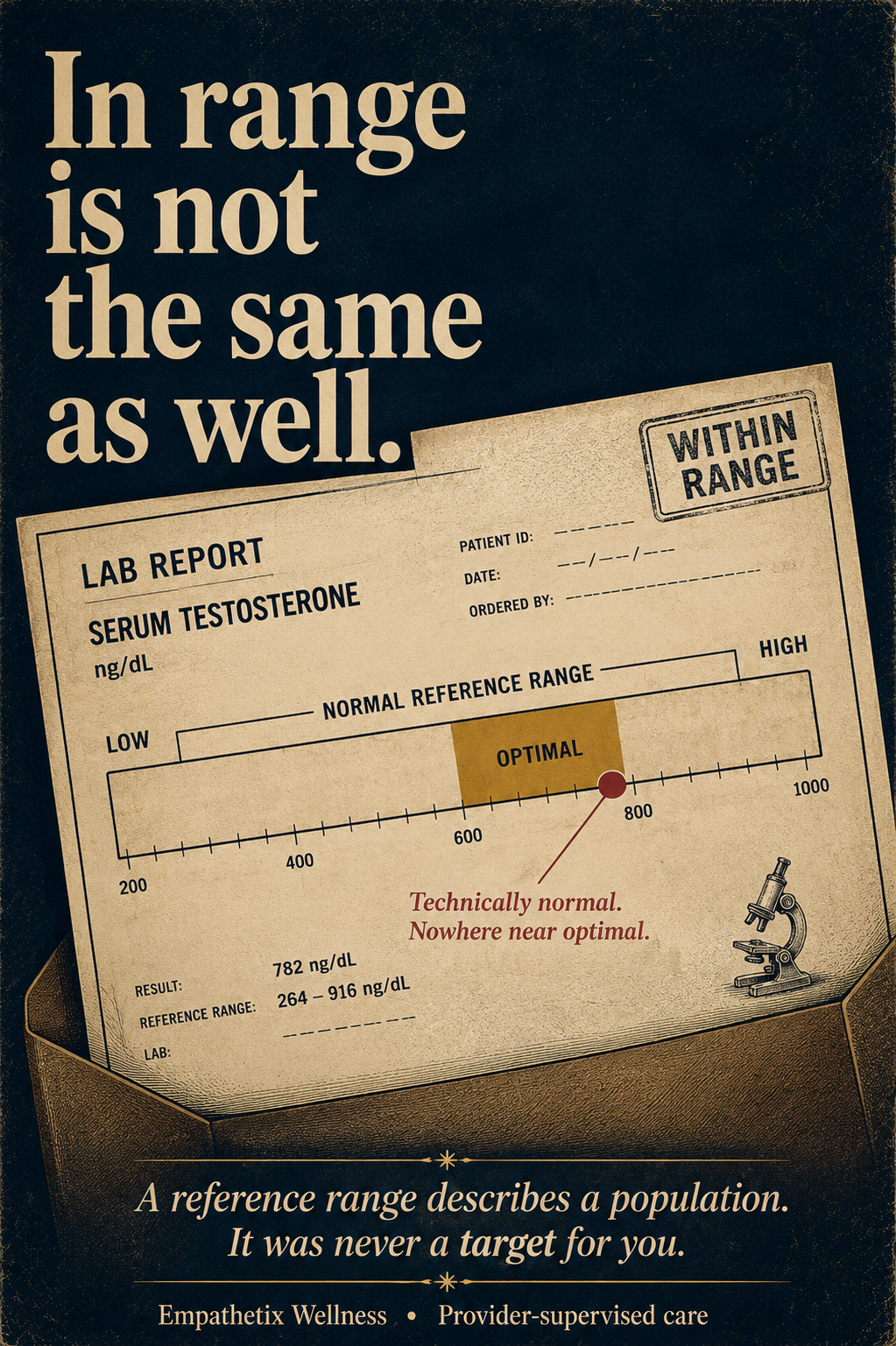
You get the results back. A column of numbers. A column of ranges. Green checkmarks next to everything. 'All normal,' the portal says.
And you still feel the way you have been feeling for two years.
There is a specific kind of medical gaslighting that happens when labs are technically normal and symptoms are genuinely real. It is not that the lab is lying. It is that the reference range is answering a different question than the one you are actually asking.
What does the reference range actually mean?
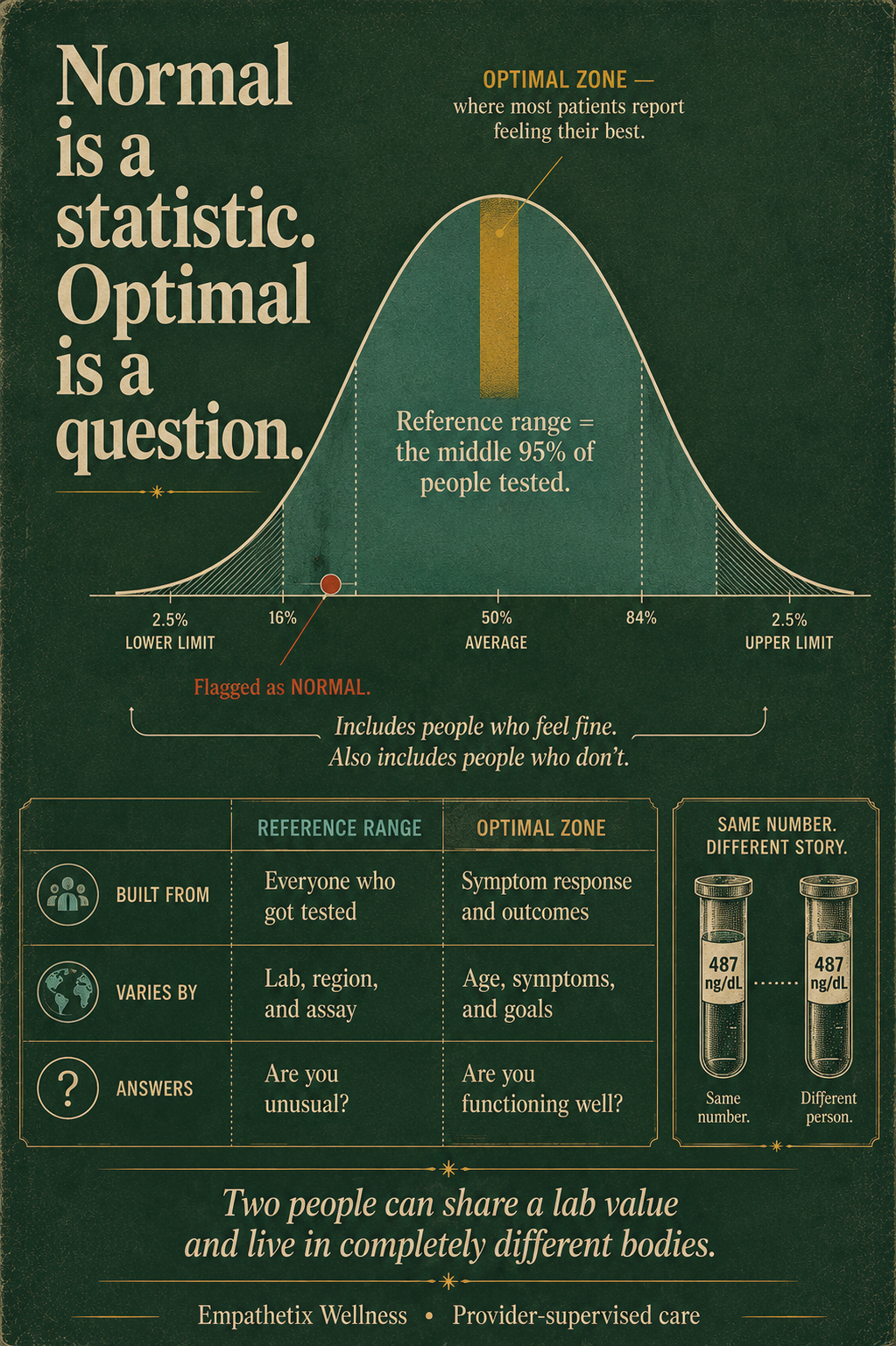
The normal range for most hormones is calculated from the middle 95 percent of the population tested. That population includes people who are symptomatic, people who are aging, people who are metabolically compromised. Normal means you are within two standard deviations of a group that may itself be not doing well.
Normal is a statistical observation about a population. Optimal is the level at which your specific body functions the way you want it to. These are different questions.
What does a comprehensive hormone panel actually look at?
- Testosterone total and free — not just total, because free testosterone is what the body actually uses
- Estradiol — relevant for both men and women
- SHBG — the protein that binds testosterone and makes it unavailable
- LH and FSH — upstream signals that tell you whether the problem is the factory or the supply chain
- Thyroid — TSH, Free T3, Free T4 — often missed and often relevant
- Metabolic markers — fasting glucose, insulin, HbA1c — because hormones and metabolism are not separate conversations
- PSA — for men, as part of baseline monitoring
What happens with the results?
Your provider reviews the full picture — not individual numbers in isolation. The relationships between markers often tell a different story than the numbers alone. A provider who looks at your testosterone, your SHBG, your estradiol, and your symptoms together has a fundamentally different conversation with you than one who says your testosterone is 310 and technically normal.
Still have questions before you decide anything?
That is exactly what the free consultation is for.
Talk to a provider — no commitment
For informational purposes only — not medical advice. Results vary and are not guaranteed. All protocols require provider evaluation and approval before
anything is prescribed. Compounded medications are not FDA-approved finished drug products. Not all patients will be approved for treatment. Medical emergency? Call 911.
© Empathetix Wellness · empathetix.com ·
(801) 804-3166 · info@empathetix.com